

bend & elevate
Welcome. Let’s Elevate
This hub is where you will find the full guided Elevate flow. The poster lays out the sequence from start to finish, so you can follow the video or move through it at your own pace. Use the full class or choose the sections that fit the time you have.
Elevate is designed to feel doable, even on busy days, with no pressure to move in a perfect way. The focus will always be the same: linking each movement to your breath to build strength and sharpen focus. Use it in a way that supports your day rather than competes with it.
How to use your poster
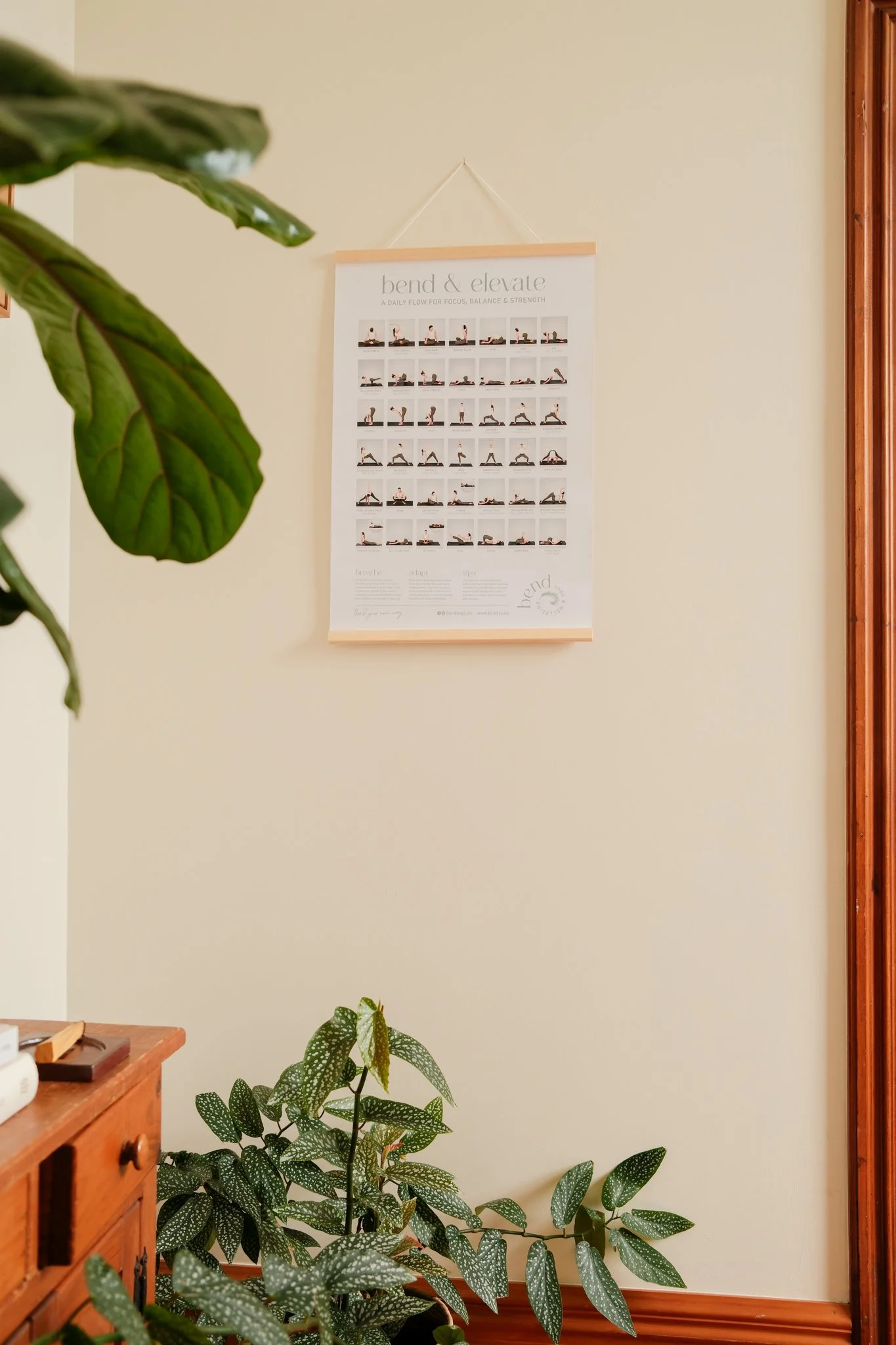
Think of your Elevate poster as a simple way to move without needing to plan anything out. Keep it somewhere you will see it often and follow the sequence as it is shown, or choose the parts that feel right for the time you have. Some days you might want something light, other days you may feel like moving with more drive. There is no strict pace and no perfect version. Let your breath guide how fast or slow you go and give yourself space to adjust on days when your body feels different.
If you want structure, but don’t have the full hour, work through the standing flow sequence and repeat it enough times for the movement and breath to feel linked. That pattern is at the heart of vinyasa and helps the flow feel smooth rather than rushed.
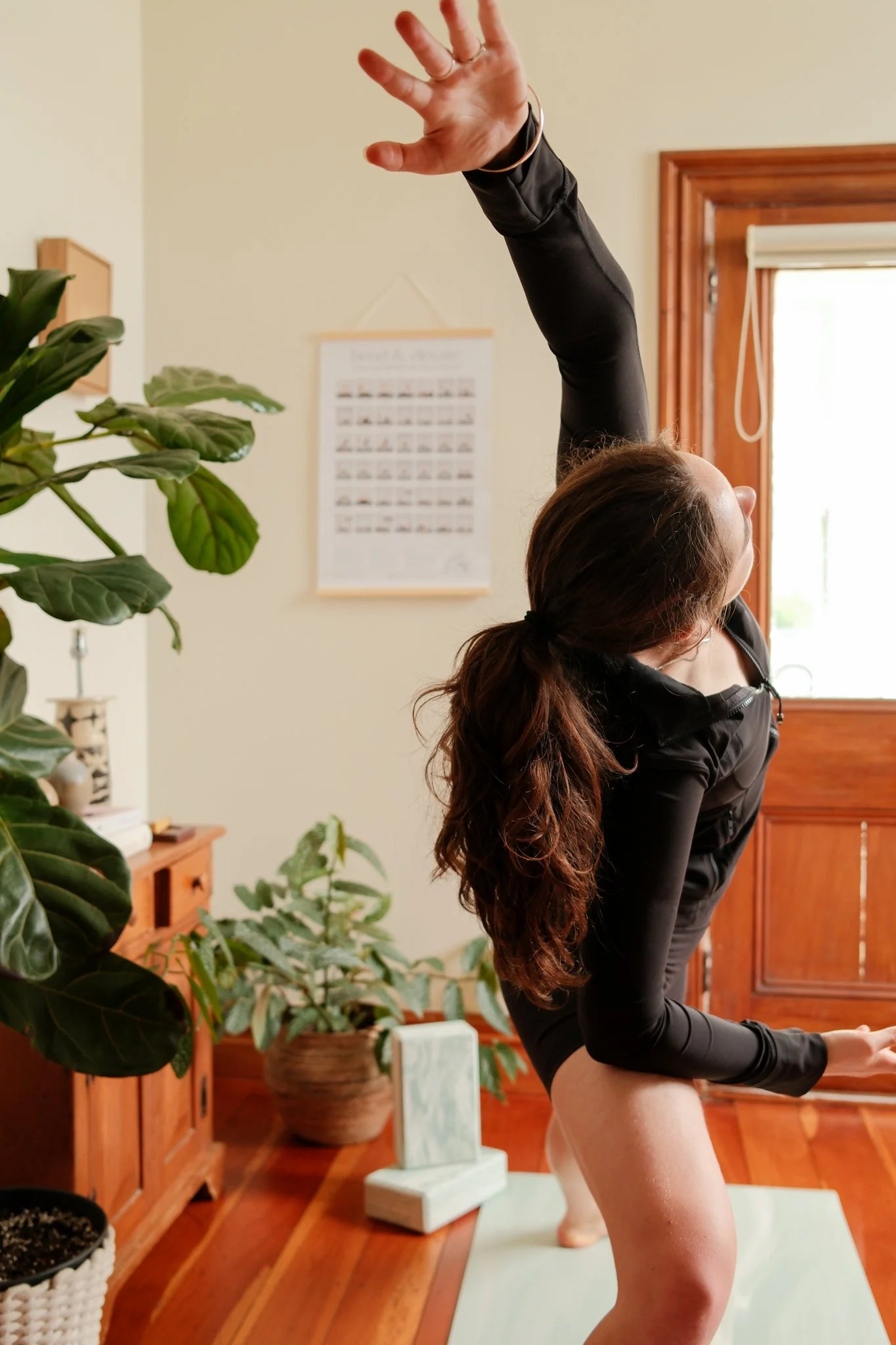
Use the poster however it suits your day. It might be a full session, a short reset, or something in between. The aim is to make movement feel doable, not demanding.
Regular movement, even in small amounts, often feels better than waiting for the perfect block of time.
The vinyasa flow style
Vinyasa flow comes from the broader tradition of modern yoga that developed in India during the early twentieth century. Its foundations are linked to the work of Krishnamacharya, who taught a strong, breath led style of practice that later influenced teachers such as Pattabhi Jois and B. K. S. Iyengar. Over time, the approach evolved into what is now called vinyasa flow a style where each movement is timed with an inhale or exhale.
The purpose of vinyasa is simple. It uses breath as the driver of the practice, creating a rhythm that helps build strength, mobility, heat, and focus. The flow is designed to shift smoothly between shapes so the body stays engaged and the mind stays present. Repetition is intentional. It helps you find a consistent pace and allows the sequence to feel more familiar each time you return to it.
Elevate follows this structure. It moves through a warm up, a standing sequence, and a warm down in a way that reflects the original purpose of vinyasa to connect movement and breath so the practice feels organised, physical, and mentally steadying. It is a style that adapts well to busy days because the framework is clear and the focus stays on moving with purpose rather than pushing for perfection..
Move with me
Join me for the full Elevate flow. You can follow the class as it is or treat it as a guide and move at your own pace. Let the breath support each transition and keep things workable rather than perfect. Use this practice in a way that suits your day.
Learning the ujjayi breath
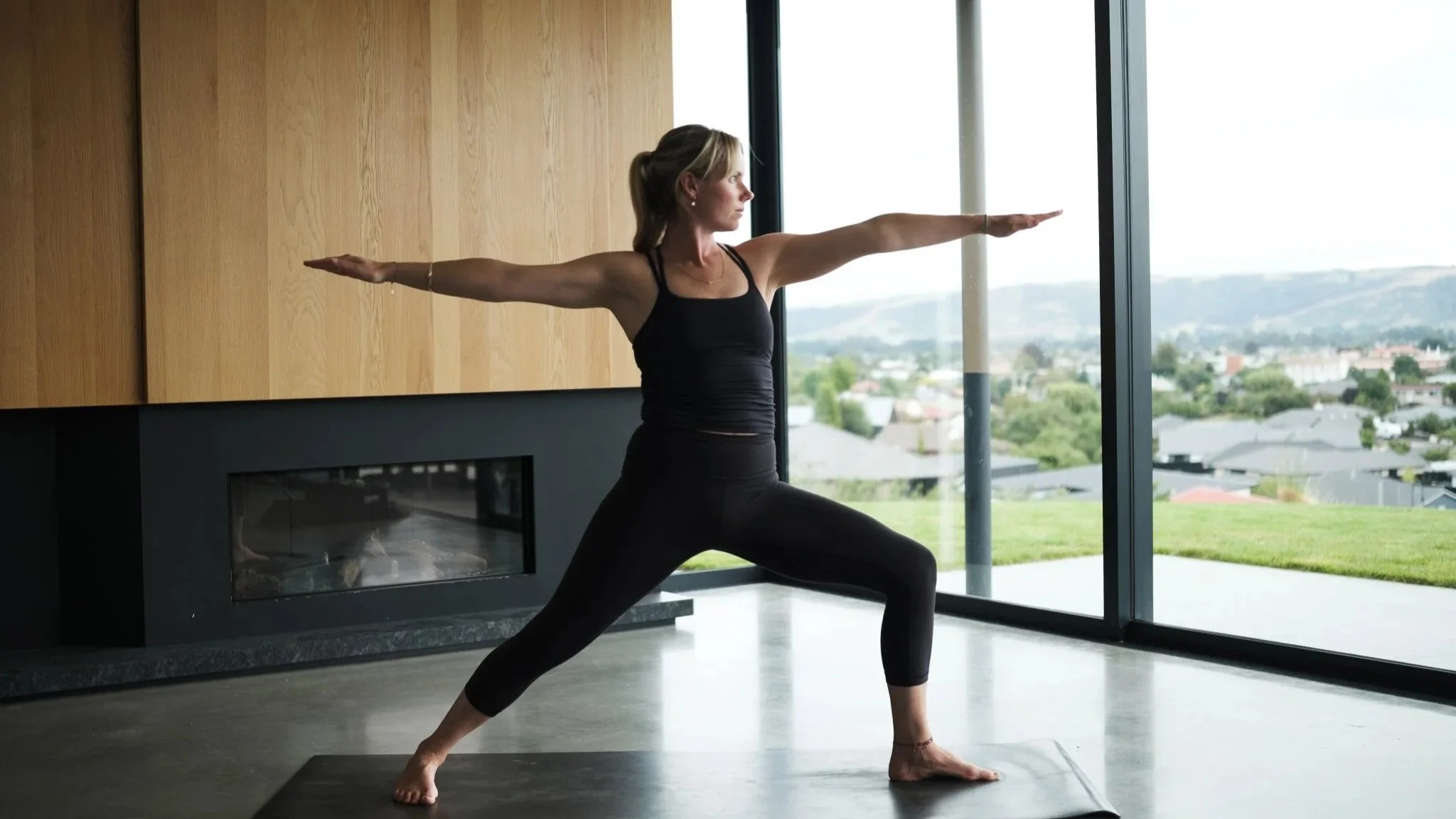
Ujjayi breath is a technique used in many forms of vinyasa practice. It comes from the same early teachings that shaped modern flow yoga, where breath was treated as the driver of movement. The breath is taken in and out through the nose with a gentle narrowing at the back of the throat, creating a light ocean like sound that helps regulate the pace of the practice.
The purpose of Ujjayi is simple. It gives you something clear to follow, supports heat and stamina, and keeps your attention anchored as the sequence builds. It also helps prevent the breath from becoming shallow when the body starts working harder.
The guided video below shows you how to set up the breath and how to use it during Elevate. Once it feels familiar, Ujjayi becomes a helpful tool off the mat as well. It can bring some order to busy moments, support focus when your mind feels scattered, and give you a way to reset your breath when the day feels overwhelming.
Get set up
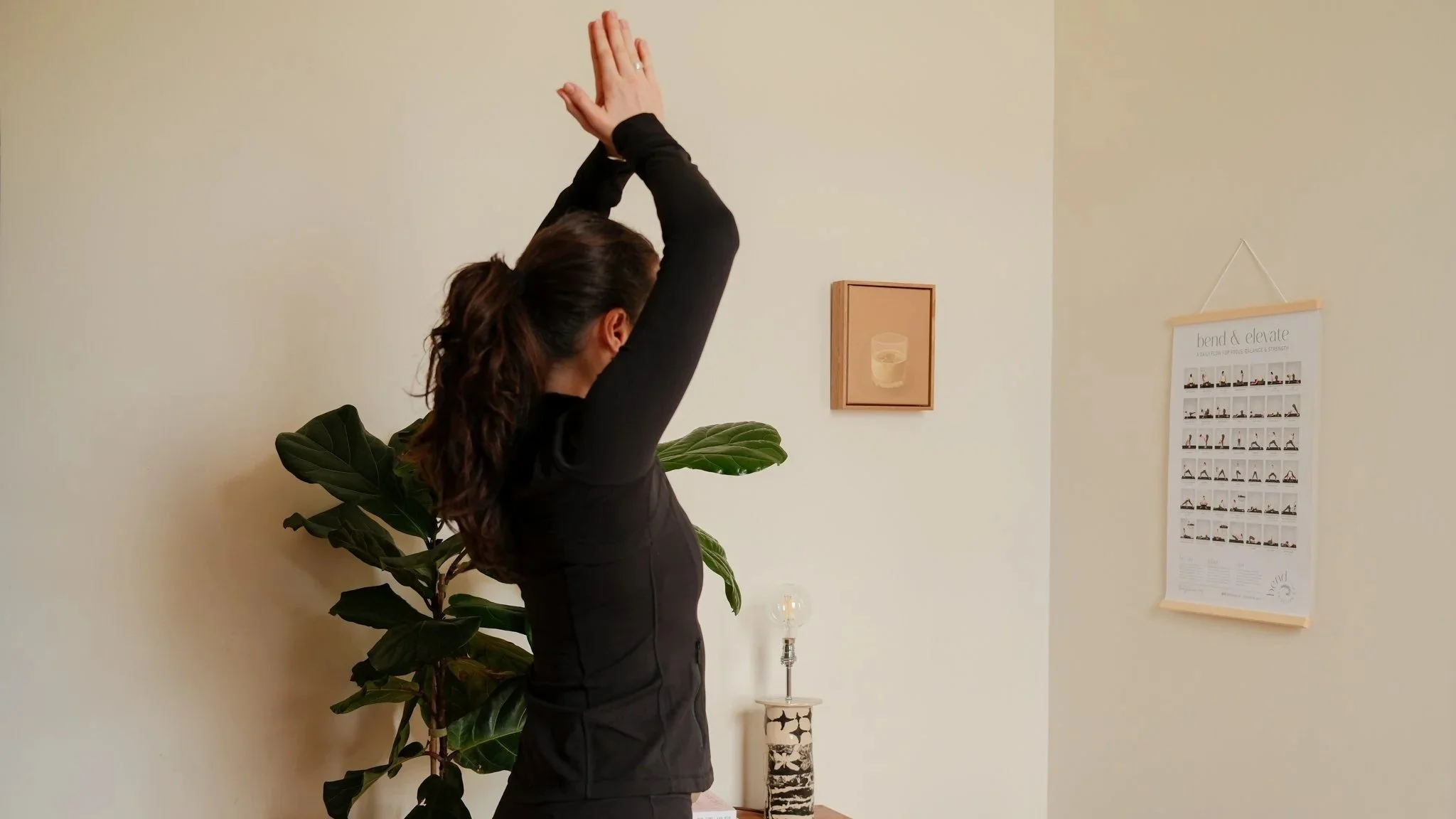
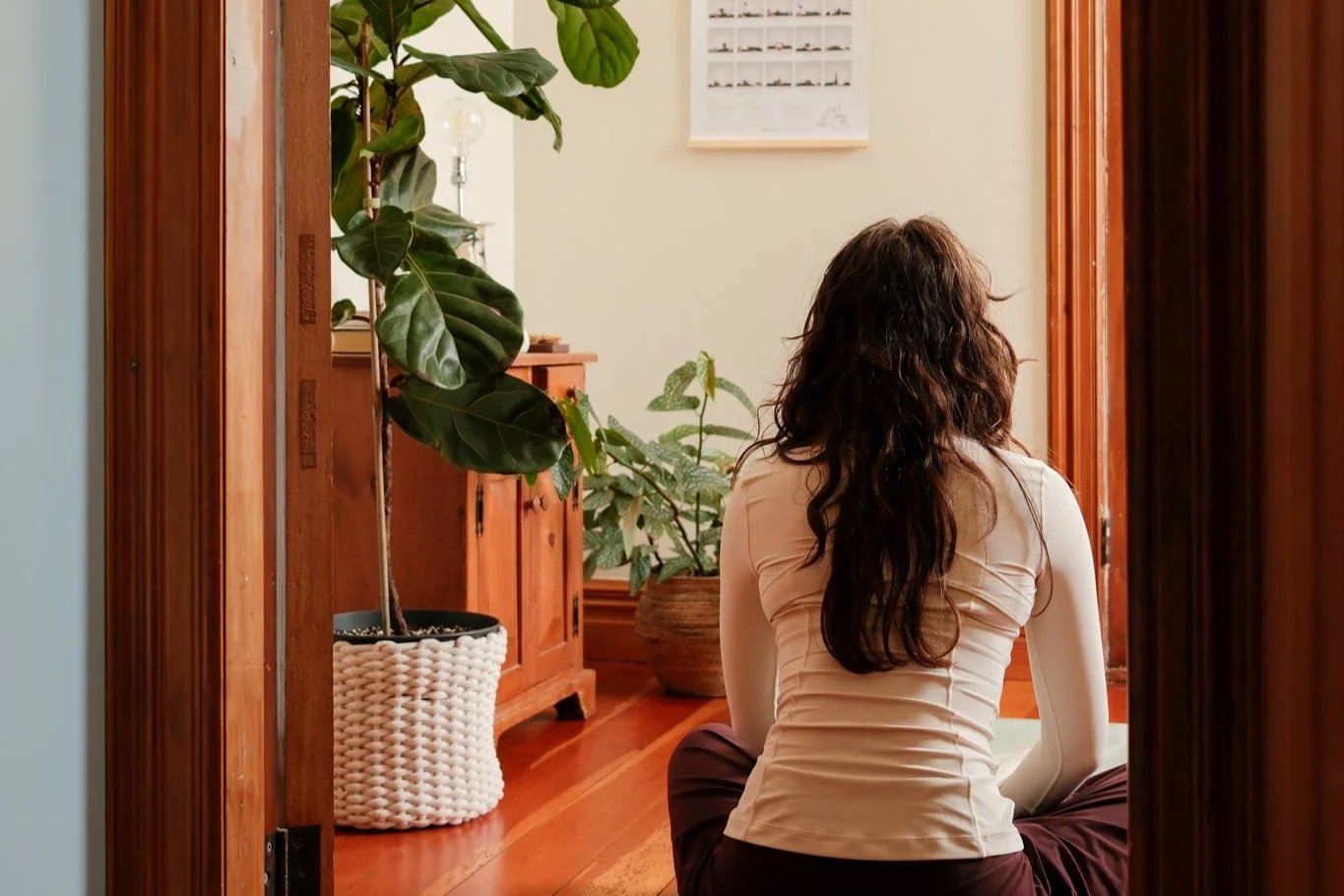
An aesthetic setup is nice, but you do not need perfect conditions to start. Keep it simple. Make a bit of space, remove anything that will distract you, and keep what you need close so you can stay in the flow without stopping. You do not need a full studio. Use what you already have and let the rest be good enough.
Yoga props and easy swaps:
Blocks: books
Strap: scarf, robe tie, belt
Bolster: pillows or rolled blankets
Mat: a rug or folded blanket
Knee support: small cushion or towel
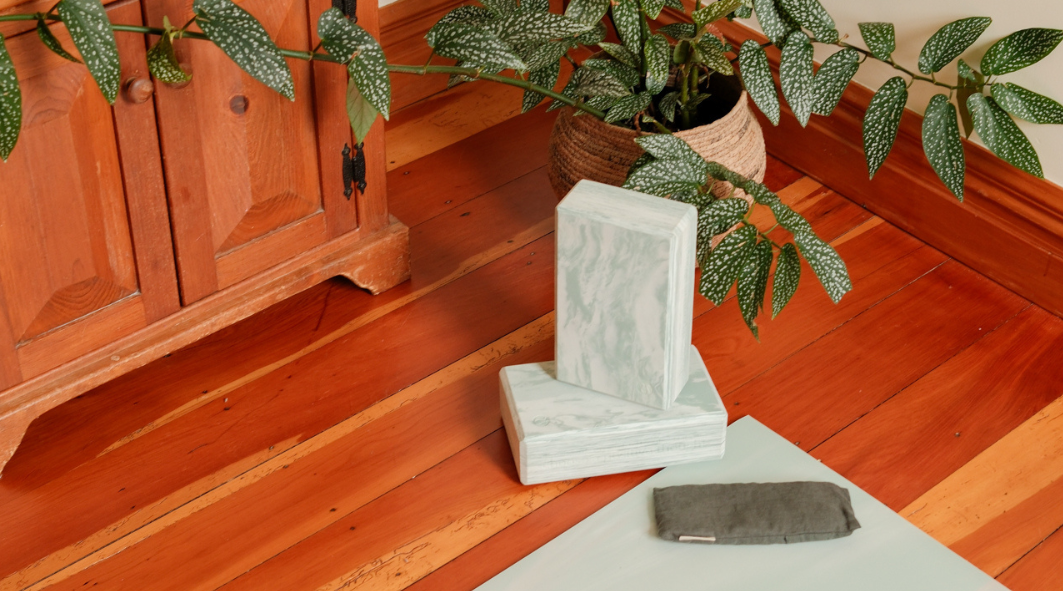
This does not need to look perfect. It only needs to feel practical for you. A few minutes of movement is always better than waiting for everything to line up.
A few ideas to get you started
If you’re not sure where to begin, here are a few easy combinations based on what your body might need on the day. You don’t have to follow these in order. Pick the shapes that feel right and hold each one for a few minutes.
For tight hips
• Butterfly
• Dragon
• Low Lunge Dragon
• Sleeping Swan
For a stiff lower back
• Child’s Pose
• Sphinx
• Melting Heart
• Supine Twist
For upper-body tension
• Side Stretch
• Thread the Needle
• Shoulder Stretch
• Spinal Twist
For a full-body reset
• Caterpillar
• Happy Baby
• Reclined Butterfly
• Legs up the Wall
One last thing…
If something isn’t landing or you’re unsure how to tweak a pose, reach out. I’m always happy to help you get the most out of your poster and the videos in this hub.
Thanks for being here and keep bending your own way.
Kristi x