

thread the needle
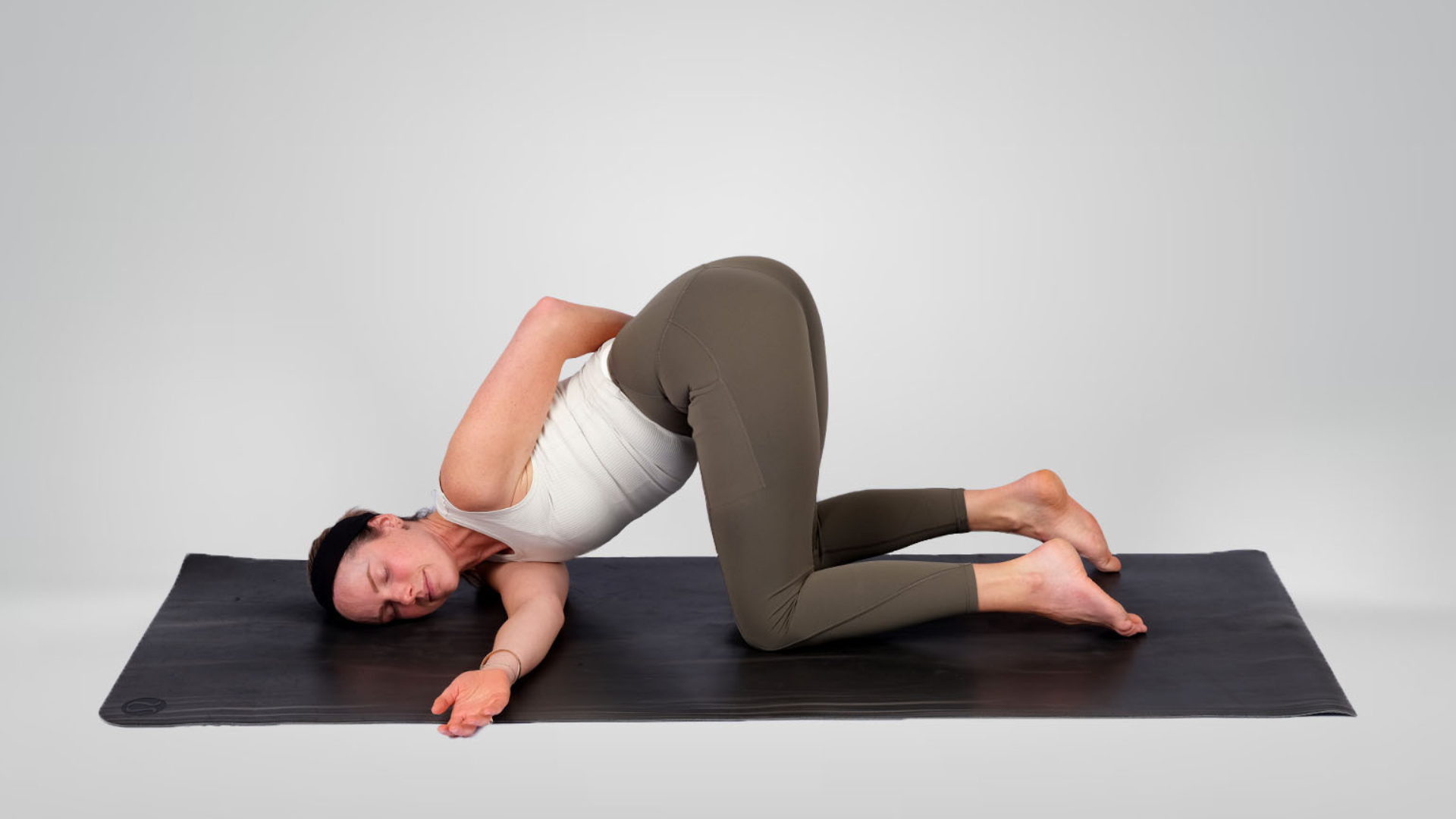
Where you might feel it
Why its good for you
Helps release tension across the upper back and shoulders
Gently rotates the spine without forcing a deep twist
Eases stiffness from desk work, driving, or lifting
Supports better shoulder mobility for daily movement
A simple shape that relaxes the upper body without strain
Shoulder discomfort on either side
Neck sensitivity when turning the head
Pins and needles through the threaded arm
Recent strain through the upper back or rotator cuff
Pregnancy or a fuller belly (take the knees wider to make space)
Any pulling through the lower back from twisting too far
After long periods of sitting or computer work
During a warm up to loosen the upper back
As a midday release when the shoulders feel tight
In the evening to unwind tension through the neck and spine
Any time you want a gentle twist without loading the lower back
When you should modify
When to use it
Across the back of the shoulder you thread under
Side of the neck
Upper back between the shoulder blades
Outer shoulder of the supporting arm
Side body on the threaded arm side
Lower back if the twist is pushed too far
How long to hold
Aim for at least three minutes on each side. Stay longer if it feels doable and come out sooner if the stretch becomes sharp or pinchy.
What to focus on
Once you settle in, let the weight of your body rest into the threaded shoulder without forcing the twist deeper. Keep the neck comfortable by adjusting how far you turn the head. If the shoulder or upper back feels strained, slide the supporting hand closer to the face or lower the hips slightly. Notice how the upper back, neck, and outer shoulder respond and make small adjustments to the angle of the twist if anything feels compressed or sharp. Use a cushion under the threaded arm or head if you want more support.
How to come out and rebound
Press into the supporting hand and lift the torso slowly. Come back to hands and knees and take a few rounds of gentle movement to ease the spine before switching sides.